ThumbSats are Go!
It’s taken a while to give this update, for a couple of reasons. The first is because I have been enjoyably busy on several wonderful and exciting projects (watch this space!) The second is because I have seen so many “space companies” promise things and not deliver. I wanted to wait until we had delivered.

After something like 15 years of dreaming, scheming, designing, building, failing, negotiating, working and persevering, my first two little satellites, ThumbSat-1 and ThumbSat-2, made it to orbit in 2025, sent their data back to Earth and safely de-orbited!
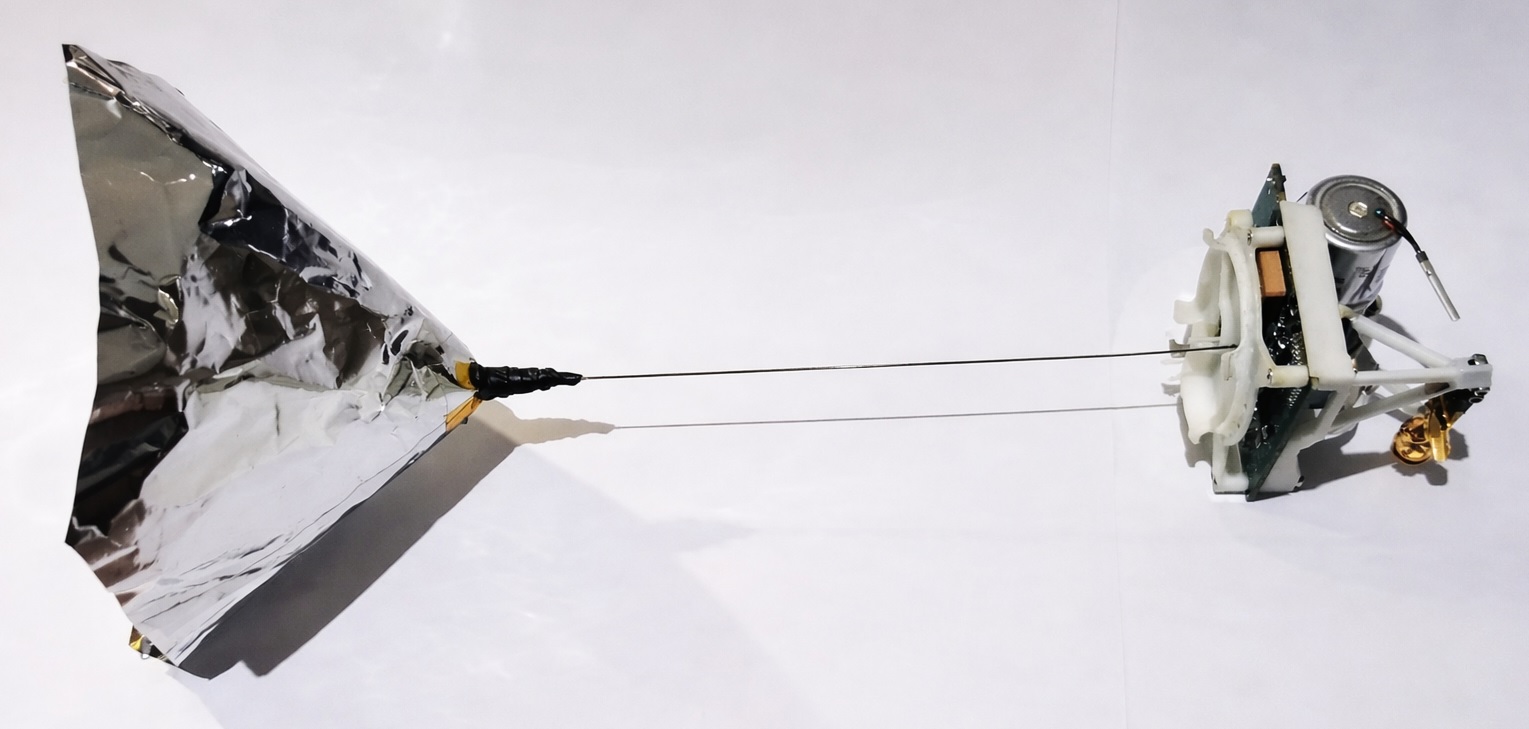
I created ThumbSats because I believe that space should be about more than telecoms and Earth Observation, and that we need a genuine replacement for the cubesat philosophy. I have seen too many cubesat kits in schools, colleges and universities in various states of assembly. What we really need is a low-cost way, that does not pollute the Earth or Space, for ordinary people to fly missions and get the data back within one academic year.
For less than the price of a cubesat kit (and remember, with cubesats you generally need to arrange and pay for your own launch, do the paperwork, get the data back) a school can fly a complete ThumbSat mission.
ThumbSats will lead to unprecedented rates of evolution of space science and exploration, and help to educate future scientists, engineers, astronauts and explorers. We need them now. I am very proud and thankful.
I have written about the genesis of ThumbSat, but there has been a lot more to the story since. Almost too much to write up. We now have our very own frequency allocation (400.600MHz) and permissions through the Mexican government. The significance of these things can’t be overstated. But the key factors have been Ahalya – my good friend, colleague and ace space systems engineer, and CAS Space, the launch service provider. They have been refreshingly positive, helpful and professional.
Through CAS Space we have agreed launch schedules and frequencies that are unprecedented for small satellites. This means that we can get your mission into space faster than anyone else can. And the launch vehicle, the Kinetica-1 is fabulously robust and capable.
It’s interesting to look back on this Wired article and think about the last 10 years or so…
The whole thing has been hugely challenging, but it has become a true global success, involving so many people. The one niggle is that I have to stay somewhat remote from the core of the company. Thanks to the UK Space Industry act, British citizens can’t procure launches or operate satellites without jumping through a lot of hoops. However, my colleagues at ThumbSat SA de CV are taking care of things, and this leaves me free to help, inspire and educate.
Manned missions are about to leave Low Earth Orbit for the first time since Apollo. It’s an inspiring thing to do and it can bring out the best in us. But let us focus on Earth, and how to make the best of it, and let us start thinking of orbit as an extension of Earth. We need to take care of Earth. We need to take care of Low Earth Orbit, and make the most use of this precious resource. ThumbSats do that.